
Oct 12, 2026Buying Guides
Choosing a Rigid Box Manufacturer? Don’t Overlook These Details
Learn how rigid-box structure, board, inserts, finishing and shipping requirements affect custom rigid box development.
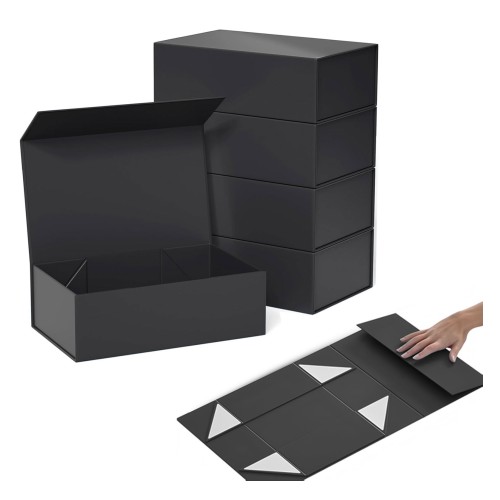
A rigid box can look simple in a photo, but producing it consistently involves more than choosing a size, color and logo.
The box structure, greyboard, wrapping paper, insert, printing and finishing all need to work together. Even shipping and storage should be considered before the structure is finalized.
So when comparing rigid box manufacturers, don't look at price alone.
Here are some of the details worth checking before you approve a sample or place a bulk order.
1. Start With the Box Structure, Not Just the Appearance
Two rigid boxes can look similar from the outside but be very different in construction.
Common options include:
- Magnetic closure rigid boxes
- Book-style rigid boxes
- Lid-and-base boxes
- Foldable rigid boxes
The right structure depends on what you are packing, how the box will be used and how it will be shipped.
For example, a traditional rigid box may provide the presentation you want, but it normally takes up more shipping and storage space than a foldable structure.
A good starting point is to tell your supplier:
- What product will go inside
- Product dimensions and approximate weight
- How you want the box to open
- Whether the box will be shipped assembled or flat
- Whether an insert is required
This gives the manufacturer more useful information than a reference photo alone.
2. Ask What Materials Are Actually Being Quoted
When comparing quotations from different rigid box manufacturers, make sure you are comparing similar materials and constructions.
A rigid box usually combines several components, such as:
- Greyboard
- Wrapping paper
- Inner lining paper
- Printed or specialty paper
- Inserts, if required
The appropriate board and paper depend on the box dimensions, structure, product and desired appearance.
This is why a quotation that simply says "rigid box" does not tell you enough.
Before comparing prices, check what board construction, wrapping material, printing and finishing are included in each quotation.
The values below are general references only. Actual paperboard thickness and suitability vary by material, construction and supplier. Final material selection should be confirmed according to the box structure, size, product and packing requirements.
Paperboard Weight & Thickness — Reference Guide | ||
Weight (g/m²) | Thickness (mm) | General Reference |
250—350 | 0.3—0.45 | Gift box linings, folding carton inner layers, small packaging dividers. |
400—500 | 0.5—0.65 | Mid-range lid-and-base boxes, outer layers for drawer boxes (lamination required), small cosmetic boxes. |
600—800 | 0.75—1.0 | High-end jewelry boxes, watch box bodies, load-bearing gift box bases. |
900—1200 | 1.1—1.5 | Large gift boxes (e.g., wine, healthcare supplements), boxes with magnetic/suction structures. |
1300—1800 | 1.6—2.2 | Heavy-duty packaging (electronics, multi-layer luxury sets), custom irregular-shaped structural components. |
3. Check Whether the Insert Fits the Actual Product
For products such as cosmetics, electronics, bottles, gift sets and accessories, the insert can be just as important as the outer box.
Depending on the product and presentation requirements, possible insert materials may include:
- Paperboard inserts
- Corrugated inserts
- EVA foam
- Other project-specific supporting materials
The insert should be developed around the actual product rather than estimated only from the outside dimensions of the box.
Before production, provide the manufacturer with accurate product dimensions and, where relevant, information about product weight, orientation and how the items should be arranged.
For projects where fit is important, checking the actual product with the sample can help identify positioning or clearance issues before bulk production.
4. Make Sure the Finishing Works With the Material
Foil stamping, embossing, debossing, spot UV and soft-touch surfaces can all change the appearance of a rigid box.
But the finishing process should not be selected separately from the material.
The wrapping paper, artwork, logo size, fine details and finishing area can all affect the final result.
For example, a finish that works well on one paper may behave differently on another surface.
Before bulk production, confirm:
- Artwork size and position
- Foil or special-finish areas
- Embossing or debossing details
- Surface material
- Expected color appearance
If the finish is important to the brand presentation, it is better to confirm it during sampling rather than relying only on a digital artwork file.
5. Don’t Approve a Sample Based on Appearance Alone
It is easy to focus on color, logo position and overall appearance when reviewing a rigid box sample.
Those details matter, but they are not the only things worth checking.
Also look at:
- Box dimensions
- Product fit
- Insert position
- Opening and closing
- Lid alignment
- Wrapped edges and corners
- Logo and artwork position
- Foil, embossing or other finishing
- Overall assembly
If the box contains several products, test them in the actual packing arrangement.
A sample should help confirm not only how the packaging looks, but also whether the structure works for the product.
6. Think About Shipping Before Finalizing the Structure
One detail that is easy to overlook is shipping volume.
Traditional rigid boxes are normally shipped in their assembled form. For larger boxes or higher quantities, this can increase carton volume and storage requirements.
If reducing shipping or storage volume is important, a foldable rigid box may be worth discussing.
However, the decision should not be based on freight alone.
The box should still meet the project's requirements for:
- Presentation
- Assembly
- Product fit
- Opening experience
- Packing efficiency
This is why structure and logistics are better reviewed together before the box is finalized.
7. Give the Manufacturer Enough Information to Quote Properly
A reference photo is useful, but it is rarely enough for an accurate quotation.
For a rigid box project, prepare as much of the following information as possible:
- Finished box dimensions
- Order quantity
- Product type
- Product dimensions and approximate weight
- Preferred box structure
- Artwork or logo
- Printing requirements
- Finishing requirements
- Insert requirements
- Packing method
- Delivery destination
If you are not sure about the material or structure, you do not need to specify every technical detail yourself.
Instead, explain what you are packing, the appearance you want and how the packaging will be used. The manufacturer can then discuss suitable options with you.
Price Matters — But Compare the Same Specification
A lower quotation does not always mean the same box is being offered at a lower price.
Differences in board construction, wrapping paper, printing, finishing, inserts, assembly and packing can all affect the quotation.
When comparing suppliers, first make sure the specifications are reasonably aligned.
This makes it much easier to understand where a price difference actually comes from.
What Should You Confirm Before Bulk Production?
Before moving from sampling to bulk production, confirm the final project details, including:
- Box dimensions and structure
- Materials
- Product and insert fit
- Artwork
- Color references where applicable
- Printing
- Finishing
- Packing requirements
The approved sample and final production specification should reflect the version you actually want to manufacture.
Planning a Custom Rigid Box Project?
If you are developing rigid boxes for cosmetics, apparel, electronics, gift sets or other branded products, send us your box dimensions, quantity, product details, artwork and finishing requirements.
Jeeli Packaging can review the structure, materials and production requirements with you before sampling.