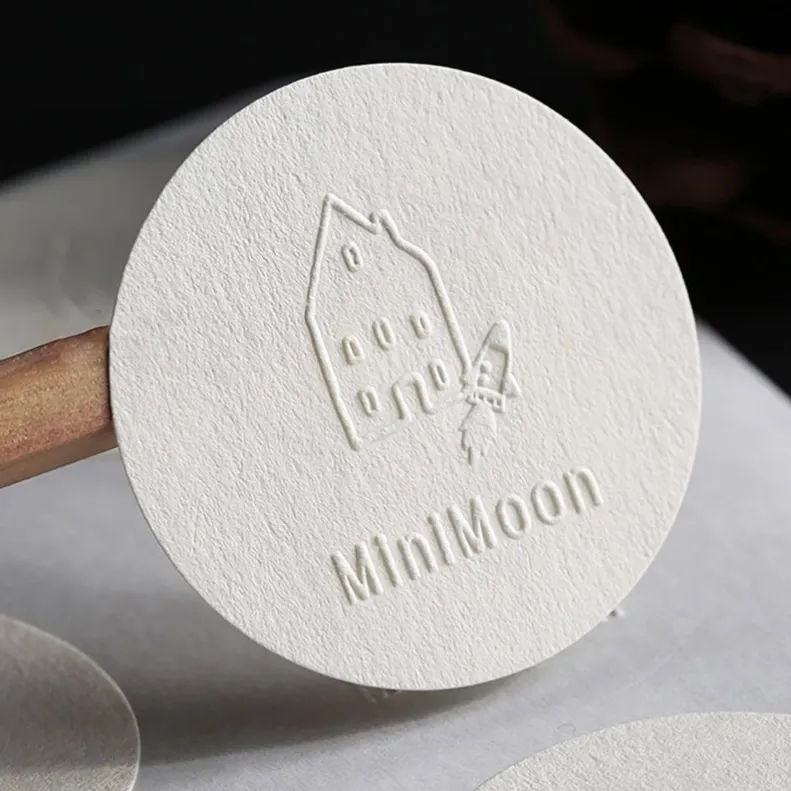
Oct 12, 2026Packaging Knowledge
Why Does Embossing Look Better on Some Hang Tag Papers Than Others?
Learn why heavyweight cotton paper outperforms coated paper for embossed luxury hang tags for clothing, and how paper fibres affect embossing quality and durability.
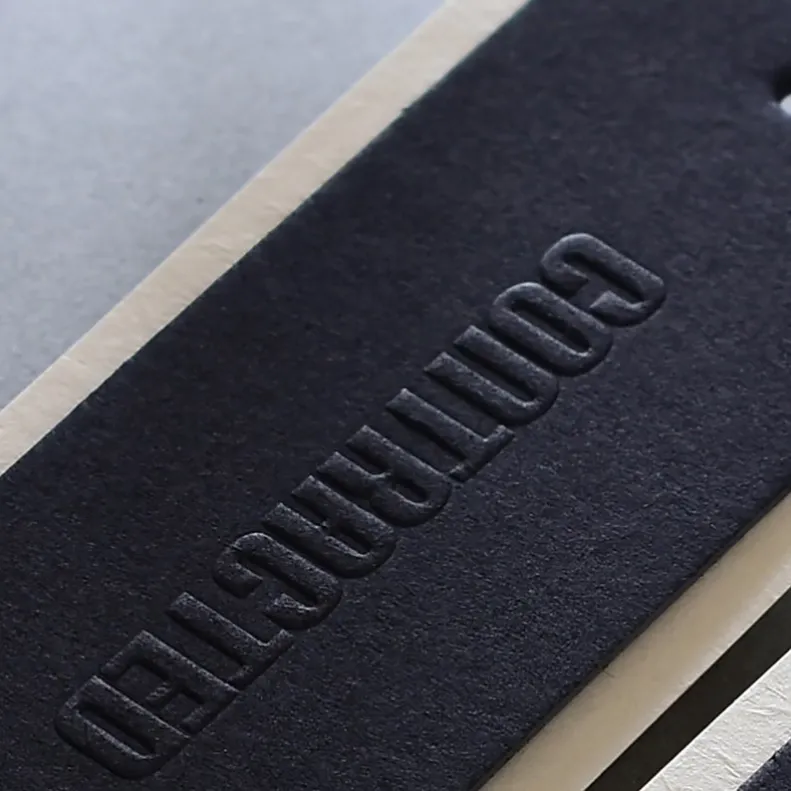
When creating embossed luxury hang tags for clothing, most brands spend a lot of time choosing the right design, printing and finishing. But the paper itself is just as important.
Two hang tags may look similar before embossing but produce noticeably different results after the same type of finish is applied.
That is because embossing performance depends not only on the die and pressure, but also on the paper's thickness, fibre structure, surface coating and flexibility.
For fashion brands sourcing custom embossed clothing hang tags, understanding these differences can help when comparing paper options and reviewing physical samples.
Embossing Starts With the Paper, Not the Press
Embossing creates a raised design by pressing the paper between a custom die and its corresponding counter.
The tooling determines the shape of the embossed area, but the paper influences how clearly that shape forms and how it feels after production.
Some papers compress and recover differently from others. Paper thickness, fibre structure, coating and surface characteristics can all influence the finished result.
This is why the same artwork can look noticeably different when embossed on two different paper stocks.
Why Heavyweight Cotton Paper Can Work Well for Embossing
Heavyweight cotton paper is often considered for premium hang tags because of its soft, tactile surface and distinctive fibre structure.
Compared with some heavily coated papers, cotton-based stocks may respond differently under pressure and can be suitable for designs where the embossed texture itself is intended to become an important visual feature.
Depending on the paper and artwork, possible advantages may include:
- A more noticeable tactile impression
- Good definition on suitable artwork
- A softer, more natural surface feel
- Strong visual contrast between raised and flat areas
- A premium appearance without relying entirely on printed graphics
However, paper weight alone does not determine embossing quality. The actual stock, fibre composition, artwork and embossing area should all be reviewed together.
Why Coated Art Paper Produces a Different Result
Coated art paper remains a practical option when accurate printed colours, photographs or detailed graphics are important.
Its smooth coated surface can provide good printing performance, but embossing behaves differently because the coating and paper structure respond differently to pressure.
This does not mean coated paper is unsuitable for embossing.
Instead, the choice depends on what the hang tag needs to achieve.
If printed graphics and colour reproduction are the priority, coated paper may be a practical choice.
If tactile branding and a pronounced paper texture are more important, an uncoated or cotton-based stock may be worth testing.
Fibre Structure Matters — Not Just GSM
GSM is useful when comparing paper weight, but it should not be used as the only indicator of embossing performance.
Two papers with a similar GSM can have different thickness, density, fibre composition and surface characteristics.
These differences can affect how the paper reacts when pressure is applied during embossing.
For buyers, this means choosing paper only by GSM may not produce the expected result.
A physical sample using the intended paper and artwork is more useful when the depth and definition of the embossing are important to the final design.
Choosing Paper Based on the Brand Experience
Instead of asking only, “Which paper is more expensive?”, it is more useful to ask:
What should the customer see and feel when they pick up the hang tag?
For example:
Brand Direction | Paper Direction to Consider | Main Reason |
|---|---|---|
Premium fashion | Heavyweight cotton or textured paper | Tactile surface and understated appearance |
Luxury retail | Cotton paper or suitable premium stock | Works well with restrained premium finishing |
Designer collections | Uncoated or textured paper | Natural texture and distinctive hand feel |
Minimalist brands | Uncoated, cotton or selected specialty paper | Clean appearance with fewer decorative elements |
These are starting points rather than fixed rules. The final choice should be based on the artwork, printing requirements, finishing process and desired customer experience.
For brands pursuing a cleaner visual direction, our guide to minimalist clothing hang tags explains how paper, typography, spacing and finishing work together.
Embossing Can Be Combined With Other Finishes
Embossing does not have to be used alone.
Depending on the artwork and paper, it may be combined with:
- Foil stamping
- Printing
- Debossing
- Edge colouring
- Die-cut shapes
- Selected surface finishes
The important point is not to add as many finishes as possible.
Each additional process should support the design rather than compete with it.
For example, brands considering a recessed rather than raised impression can compare the effect with deep debossed hang tags.
If foil is also part of the artwork, our guide to matte vs. gloss gold foil stamping explains how the foil finish can affect the final appearance.
Artwork Also Affects the Embossed Result
Even a suitable paper cannot compensate for artwork that is poorly suited to embossing.
Before production, it is useful to review:
- Line thickness
- Small text
- Fine details
- Embossed area
- Distance between design elements
- Position relative to the hang hole and edges
- Registration with printing or foil
Very fine artwork may need adjustment before tooling is made.
Our hang tag artwork checklist covers several details worth checking before approving production artwork.
A Physical Sample Is Especially Useful for Embossing
Embossing is tactile, which makes it difficult to judge from artwork files or digital mockups alone.
A physical sample allows buyers to review:
- How clearly the design is raised
- Whether small details remain visible
- How the paper surface responds
- How embossing works with printing or foil
- Whether the finished tag feels appropriate for the garment and brand
If embossing is an important part of the brand presentation, confirming the paper and finish through a sample can reduce uncertainty before bulk production.
Final Thoughts
The paper that prints best is not automatically the paper that embosses best.
Heavyweight cotton, uncoated, textured and coated papers can all be suitable for hang tags, but they produce different visual and tactile results.
Rather than choosing paper by GSM or price alone, consider the artwork, surface texture, printing requirements and the type of embossed effect you want to achieve.
If you are developing a new hang tag and are unsure which paper to test, contact Jeeli Packaging with your artwork, finished size and preferred finish. We can review the requirements and discuss suitable options before sampling.