Oct 12, 2026Industry News & Trends
Sustainable Luxury Packaging in 2026: What Buyers Should Actually Consider
Explore practical sustainable luxury packaging trends for 2026, including material efficiency, paper-based structures, plastic reduction and buyer considerations for custom packaging projects.
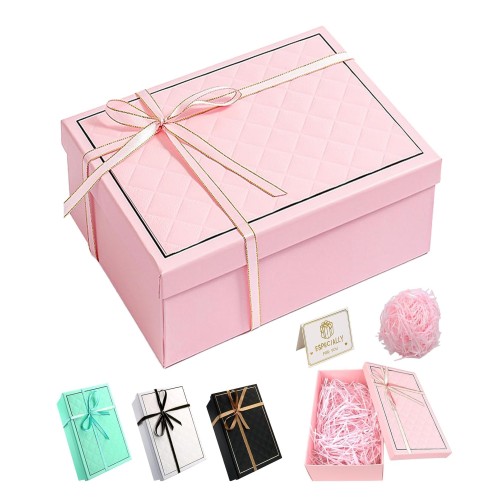
Luxury packaging is no longer judged only by appearance.
More brands are reviewing how packaging materials, structure, printing and finishing choices affect product presentation, cost and material efficiency.
For B2B buyers, sustainable luxury packaging is not simply about adding an environmental claim to the box. It is about choosing a structure that looks refined, protects the product and avoids unnecessary material complexity.
Here are five practical packaging trends worth considering in 2026.
Trend 1: Simpler Paper-Based Structures
Many luxury packaging projects are reviewing paper-based structures because they can support a premium appearance while keeping the material system relatively straightforward.
Rigid boxes, folding cartons, paper bags and hang tags can all be developed with different papers, printing methods and finishing options.
The important point is to choose the structure according to the actual product rather than appearance alone.
Before deciding on a structure, consider:
- Product size and weight
- Required protection
- Retail or ecommerce use
- Packing method
- Shipping requirements
- Desired presentation
A simpler structure is useful only when it still performs the job the packaging needs to do.
Trend 2: Reducing Unnecessary Plastic and Extra Components
Plastic windows, trays, foam inserts, laminated surfaces and other components can sometimes improve protection or presentation.
But they are not always necessary.
Before adding another material or component, buyers should ask:
- Does this material solve a real packaging problem?
- Can the box structure be adjusted instead?
- Could a paperboard or corrugated insert work?
- Does the product actually require a window or tray?
- How will the additional component affect packing and material separation?
Reducing unnecessary components can simplify the packaging structure and may also reduce material use.
The goal is not to remove every non-paper component regardless of function. It is to avoid adding materials that do not provide meaningful protection, presentation or handling benefits.
Trend 3: More Attention to Mono-Material Packaging
Mono-material packaging generally refers to packaging designed primarily around one material or material family where practical.
For paper packaging, this can mean reviewing whether unnecessary mixed-material components can be reduced and whether more of the structure can remain paper-based.
However, mono-material design should not be treated as a universal solution.
A cosmetic bottle, electronics accessory, gift set and apparel product may all require different levels of protection and different packaging structures.
The practical goal is to balance:
Presentation → Product Protection → Material Choice → Production → Packing
rather than choosing a material direction based on one trend alone.
Trend 4: Inserts Should Solve a Real Packaging Problem
Inserts are useful when they hold the product in position, separate multiple items, protect components or improve presentation.
But an insert should not simply fill empty space.
Sometimes the real issue is that the box is too large.
Before adding an insert, buyers should check:
- Product dimensions
- Final internal box dimensions
- Product shape
- Required clearance
- Number of components
- Shipping requirements
A correctly sized box may reduce the need for additional material.
The question should therefore be:
What problem does the insert need to solve?
Trend 5: Premium Finishing With More Restraint
Premium packaging does not always require many decorative processes.
Foil stamping, embossing, debossing, Spot UV and other finishes can add visual or tactile detail, but they should support the overall design rather than compete with it.
For some luxury packaging projects, a clean structure, suitable paper and carefully selected finishing can create a stronger result than using several decorative processes at the same time.
This is particularly important when material choice, production complexity and cost also need to be considered.
The better question is not:
How many premium finishes can we add?
but:
Which finishing details actually improve this design?
What Should Buyers Consider Before Choosing a Sustainable Packaging Direction?
Before deciding on a packaging structure or material, review the complete project.
Useful information includes:
- Product size and weight
- Protection requirements
- Retail or ecommerce use
- Material preference
- Printing requirements
- Finishing requirements
- Insert or divider needs
- Packing method
- Quantity
- Budget
- Target market
These factors often affect one another.
For example, changing the box size may change the insert requirement. Changing the paper may affect printing and finishing. Adding another component may affect assembly and packing.
This is why packaging should be evaluated as a complete system rather than as a list of individual materials and finishes.
What Does This Mean for Luxury Packaging Buyers in 2026?
Sustainable packaging development is increasingly about making more deliberate choices.
That does not necessarily mean using the least material possible or removing every decorative process.
Instead, buyers can ask:
- Is every packaging component necessary?
- Is the box appropriately sized for the product?
- Can unnecessary mixed materials be reduced?
- Does the insert solve a real problem?
- Are the finishing processes supporting the design?
- Is the structure practical for production, packing and shipping?
These questions can help buyers identify where packaging can be simplified without automatically sacrificing presentation or protection.
How Jeeli Packaging Supports Custom Paper Packaging Projects
Jeeli Packaging manufactures custom paper packaging including rigid boxes, folding cartons, mailer boxes, paper bags, garment hang tags and printed labels.
For custom projects, we can review factors such as:
- Product dimensions
- Box structure
- Paper selection
- Printing
- Finishing
- Inserts
- Packing requirements
- Order quantity
If sustainability or specific target-market requirements are important to your project, these should be identified early so that suitable material and structural options can be discussed before sampling.
Final Thoughts
Sustainable luxury packaging is not defined by one material, one structure or one finishing process.
A better approach is to look at the complete packaging system:
Product → Structure → Materials → Printing & Finishing → Protection → Packing
For some projects, that may mean reducing an unnecessary plastic component.
For another, it may mean using a better-sized box instead of adding an insert.
For another, it may simply mean choosing fewer finishing processes and allowing the paper and structure to do more of the visual work.
The goal is not to follow every packaging trend.
It is to develop packaging that makes sense for the product, brand, production requirements and target market.